The flight from Australia was more exhausting than I anticipated. The good thing was there were only two of us in the row, but that slight lack of discomfort did not mean I actually got more than a one-hour snooze. I lumbered around Abu Dhabi airport in the three-hour gap between flights. The next leg of around four hours was made a bit tortuous as I sat next to two fat Samoans. Friendly people but I was more or less trapped in one spot.
I managed to get an early check in to my hotel but had to upgrade to another room. A 25 euro expense. Still, I found it hard to completely wind down but there was worse to come during the day as it was clear there were repairs underway and the noise from this was dreadful in spurts. I did eventually fall into a slumber to be woken at 7:25 pm by the blaring call to prayer. I stumbled out into the street to the nearest restaurant to get dinner which I needed to leave quickly as fatigue crept in again.
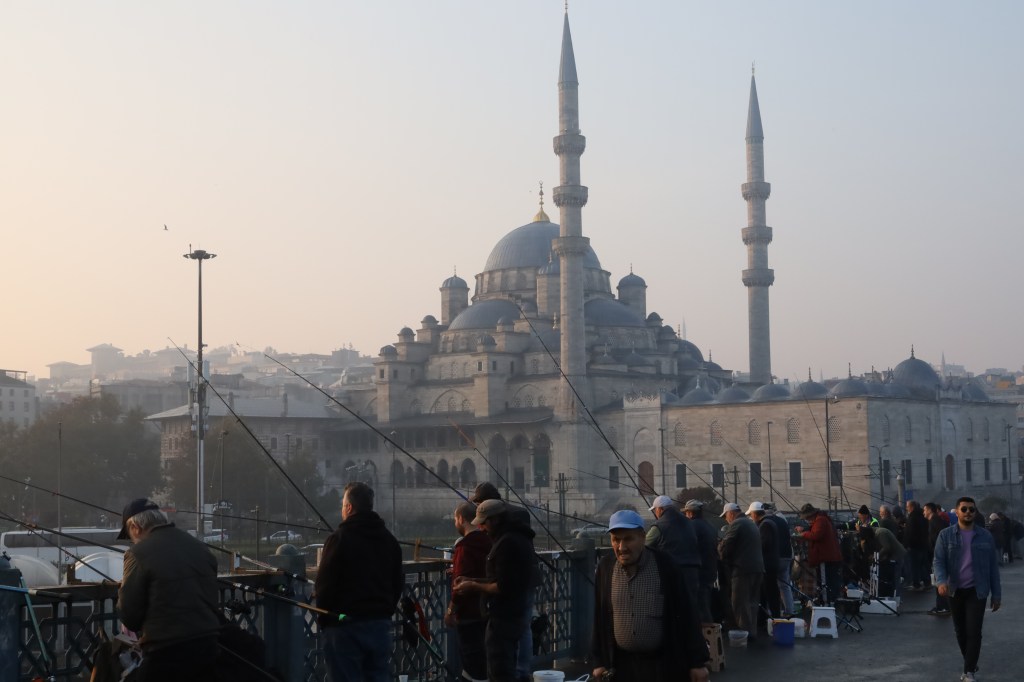
I was up early the next day, but Istanbul is not really an early waking city. The streets were largely quiet with a dribble of people heading to work. Having spotted the crowds fishing off the Galata Bridge the first day when I was coming from the airport, I headed there again in the misty morning. The food stores were open early with their fabulous array of spices, teas, dried fruits and olives. I couldn’t resist buying a selection of the amazing Turkish delight in their dazzling colours. I think it was fate that I was born an eater rather than a drinker and the display of food was hypnotising.
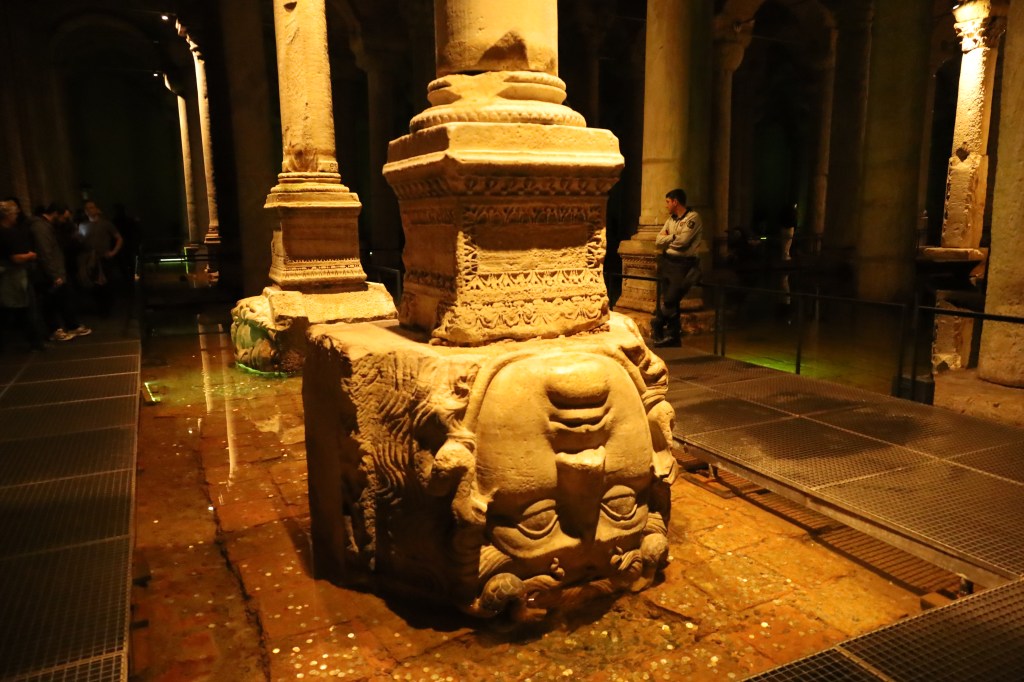
Istanbul was merely a stopover in the hope I might recover a bit. So, my sightseeing ambitions were limited. I had not heard of the Cistern Basilica before on my previous visit and wasn’t even sure if was open for public viewing all those forty eight years ago. It was quite atmospheric and the upside-down Medusa head was quite strange. It had some awful entry price – somewhere around the $A45 mark – but was something quite different. More about it here https://en.wikipedia.org/wiki/Basilica_Cistern
Getting to the airport to fly to Batumi in Georgia the next day started early. There was an argument with the hotel they had said that I hadn’t paid for the shuttle which I had done before the previous day anyway after this argument started something else on the way back to the airport. Jackie rang to say that the Internet had gone off in Umina and there was an issue with it and we couldn’t really figure out, There was much toing and froing with the Internet provider they said that Jackie wasn’t on the account so she couldn’t speak to them about it I then had to call them while I was on the shuttle to the airport and try and argue and get through to everyone but it couldn’t really work. It just went on and on and on and all the people in the shuttle had to listen to my conversation. Eventually it was found out that it was actually the NBN issue and somehow the wire to the house had been cut by some clumsy tradie in the next street. So, I then arrived at Sahiba Gokcen airport, which is in a constant state of anarchy. After putting all myself through security I then found that I had left my Fitbit behind. I immediately went back to security. By some miracle I actually got it back.
The airport was hideously humid there as there wasn’t really a proper cooling system in there. Despite the fact it was in autumn, but it was still pretty warm and the whole place was an oven. However, the flight left pretty close to schedule.
Georgia
Arriving in Georgia was a breeze. I was actually through customs and immigration in less than half an hour. I had made sure my ride sharing Bolt account was functioning before I got there. I hate dealing with taxi drivers when arriving in a new city or country. Always a rip off and inevitably an argument. It was easy to get a driver on the app but quite a bit more difficult to find where he was,
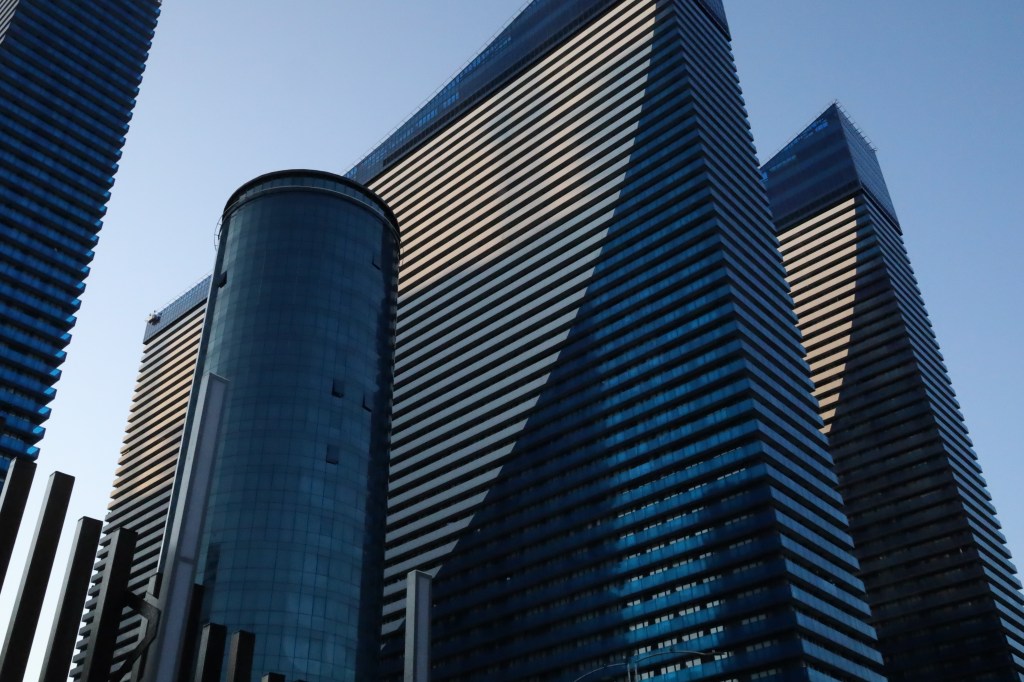
Eventually with the help of some people I had asked, I found the driver. He was quite sneering with me because it was quite obvious where he was waiting. On the way into town he again sneered at me when the address was slightly wrong, I had Tower C when it should have been Tower A. That was because the Bolt map didn’t have Tower C. Anyway, all of this was accomplished in record time. The apartment I had booked was in a huge tower complex in a part of Batumi that was trying to be like Las Vegas. I found myself on the 17th floor of an apartment block that was huge but it did have a balcony which as promised it did have a view of the sea. The Black Sea was as calm as a lake and it looked quite impressive as the sun went down.
The following morning, I decided to walk into town along the huge promenade that lies between Batumi and its shore. It was a pleasant walk and the plenty of greenery but also a large, dilapidated amusement park. Along the shoreline on the city side was quite pleasant and people cycled, scooted, walked and jogged past. It was nice to be by the sea and the grey sand reminded me a bit of New Zealand. Coming from Istanbul which is a city of cats, Georgia appeared to be a country of dogs. There were many dogs hanging around sleeping unaccompanied, some sunbathing on the beach.

The old town itself it was quite a bit nicer. There weren’t too many dilapidated buildings and it didn’t look like a construction site unlike the area I was staying in. There wasn’t really a whole lot to do I had a nice coffee in a café and walked around a bit looking at the buildings. The archaeological museum, which was supposed to be good, was actually closed. In tune with much of the newer Batumi, it was a construction site. I guess you would say that the old part of Batumi was quite nice but I found little to excite me here.

The following day panned out well. I had only a forty-minute wait at the bus station for a marshrutka to Kutaisi. I had planned to hire a car there and arrived pretty much on time. The marshrutkas are minibuses that are the backbone of local transport in Georgia – in fact in much of the ex-Soviet Union countries. They are cheap but the drawback is they rely on demand. They don’t go until they have sufficient passengers. Consequently, you don’t know when you will leave or when you will reach your destination. This created a further complication as the hosts of accommodation in the next town were contacting me to ask when I would arrive. I couldn’t really answer but you would have thought they would have understood.
I had hired a car in Kutaisi which always has a slight level of stress given the switch to the other side. I seem to have got better at this in the last few years despite my directional dyslexia. Also, in a new country you cannot be sure what the driving conditions will be. It didn’t start well as I pulled out from the rental place, I was nearly hit by a car as I turned left. I had forgotten the level of driver impatience that infects much of the world and cars can come from any direction. Georgian driving isn’t that bad but there is a tendency to treat white lines as invisible. Driving will never be as ordered as England or Australia but there are general rules of agreed behaviour that can be worked out in a short time.

I checked in at the rather rustic apartment I had rented run by a friendly old couple. She did most of the talking and was very welcoming. I then jumped in the car and headed to a place called Tsalktubo about 15km out of town. This was once a popular spa town in the Soviet Union where the state would treat favoured workers to a holiday. I had seen pictures of the old deserted spas – grand buildings turning to ruin. I was looking forward to this.
I had mapped out the ones that were supposed to be worth exploring. One of them was at the point of ruin where it had been closed off. But there were others that were great to have a look around. There was something about the way nature was reclaiming them that was mesmerizing. In one of the better examples, Sanatorium Metallurgist, a large chandelier hung in a huge atrium and you could see the fancy columns. It was classic Soviet style.
An elderly couple, who was probably squatting there, had set up a table at the front door to charge anyone who came. I had actually circled the building and appeared in a back entrance. The woman at once started shouting and walked up to me. She asked for five lari (about $A3) as an entrance fee. That was probably one lari for each of her remaining teeth. I thought it was best to cough up and buy peace and quiet – a very modest bribe. They both immediately changed their tone, asking where I was from and signalling their approval.
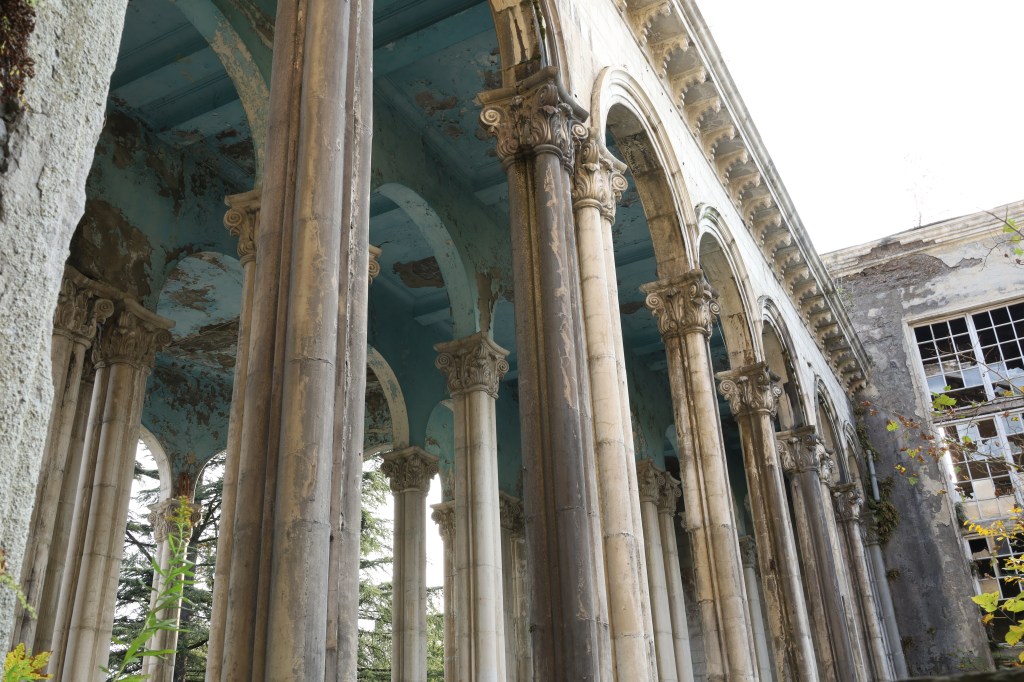
There was an eeriness to the deserted and sometimes quite dark corridors, The inevitable stray dogs were lurking but thankfully showed no interest in me. At the equally impressive Sanatorium Medea, a group of noisy Russians had arrived in a car. Thankfully they departed soon after, leaving me again alone to wander the building in solitude. Some of the rooms showed signs of people living in them and some smelt dreadful from discarded rubbish bags and other matter I didn’t want to investigate too closely. The ruins of the old Soviet Empire will always have a fascination for me. I guess all empires eventually fall.
The next day I drove out from Kutaisi to visit a few old monasteries, one of which was shut for renovation. I headed through lovely autumnal countryside with a dazzling colour display. I posted some of my dashcam footage on YouTube – https://youtu.be/EMTK8RTfpos?si=CEM9QwWjtDMDfJec ignore the date imprint on the video – it was November 2025.
I headed towards a town called Chiatura, hoping to find more Soviet ruins. On that I was disappointed as it was a nondescript town and much of the ruins of the mining there had been cleared it seemed. I did stop to visit the bizarre Katskhi Pillar. A monastery situated on top of a 40 metre natural stone pillar. Very Instagramable. It got little response when I posted a photo but I should have put a disclaimer saying that it was not AI. It seems to have had pre-Christian roots but was turned into a monastery some centuries ago. Much of its history is a mystery but it was revived in more recent times. More details here: https://www.advantour.com/georgia/chiatura/katskhi-pillar.htm

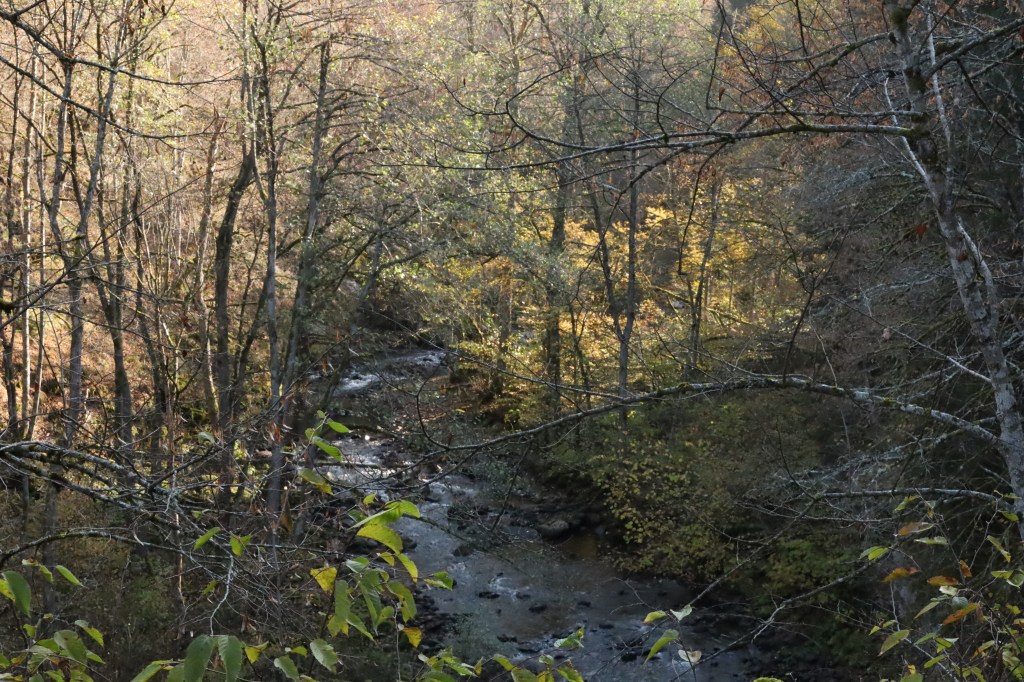
The next day I headed to a spa town called Borjomi that had been recommended by a friend. The natural spring water is famous in Georgia and sold in bottles. Overall, the place was not very exciting. I did take a walk out to some well-known sulphur baths. Coming from New Zealand the whole concept of these sorts of natural thermal baths is a bit ordinary. The walk through the forest to get there was wonderful. The autumn leaves were dazzling and it was a lovely walk on my own in complete peace and quiet. The idea that bears might be lurking was a passing thought but I thought it unlikely they would be around with no obvious rich sources of food at this time of year. When after 4km of forest walking I did come across the baths, I regretted my decision to jettison my swimming togs when I was packing thinking it was almost certain I wouldn’t need them. The signs around the baths stated wearing underwear was forbidden and the gruff staff left no doubt all rules would be strictly enforced. The baths were nicely constructed and tranquil and I would have been the only punter at the time. A chance to float in in solitude in the middle of the forest would have been a nice experience but the staff slammed the ticket office window in my face when it became clear I didn’t have the necessary equipment. So, I turned and walked back through the lovely forest, encountering a few people along the way this time. Georgia wakes up late and I had struggled to find an open café at eight in the morning.
I had hoped to take the battered old train to my next stop – Gori. There were two a day but it left either too early or too late to make it feasible. I thought I might struggle navigating the mashrutkas to get there but in the end it didn’t prove two difficult. I had to catch two of them – the first to the larger town on the main road and one on from there. When I did arrive at the first stop, the signs weren’t too encouraging. I was pointed in the direction of the mashrutka heading to Gori. The driver was slumped in the front seat, snoring. As these go on demand, that is they only leave when they’re full, I was not too hopeful of going anywhere soon. But after fifteen minutes the place livened up quite a bit. More passengers arrived and the driver woke from his slumber. It was a fairly short ride to Gori.
I made my way to my very traditional accommodation which was rather tacky in its decoration. The foyer was dominated by two life-sized mannequins dressed as a married couple. The groom wearing Cossack style dress. Gori is famous for one thing really – it was the hometown of Joseph Stalin (ne Dzhugashvili) probably the most (in)famous Georgian. It is an unremarkable town and I was stared at in the streets where I saw no other obvious foreigners.

The main attraction is a Stalin museum. With his fall from favour in the Soviet Union and after, the museum had been closed and abandoned. But it had later been re-opened but seemed to be stuck in a 1950s time warp. A very Soviet style interior in a classically themed building with lofty pillars. By total coincidence, an English-speaking tour started shortly after my arrival. The guide was a somewhat grim-faced Goth looking woman with a severe, asymmetrical haircut. I expect she hadn’t smiled in the last decade and she conducted the tour in a monotonic, grim manner but was informative about the exhibits. The tour ended in the rusting armoured carriage in the museum grounds. This was the occasional carriage Stalin used to travel around the country. At the conclusion, the guide asked if there were any questions. Most people were probably reticent to say anything to here but I piped up and asked how Georgians today felt about Stalin. Her reply was along the lines that young people revile him, but older people revere him. The security that existed for people in the Soviet Union was sorely missed after independence where war, instability and rising prices for basic essentials were most keenly felt by those used to the previous status quo.
I did finally get my wish to travel by train on the next leg to Tbilisi. Getting the ticket proved to be a breeze on the Georgian Railways’ efficient website that had an English option. When I showed up the station it was largely deserted. It took some asking to find out which of the two platforms the train would leave from. When it did arrive the gruff guard was not interested in my ticket but insisted I show my passport which he snatched and subjected it to intense scrutiny. He then dismissed me with an indifferent wave in the direction of the relevant carriage.
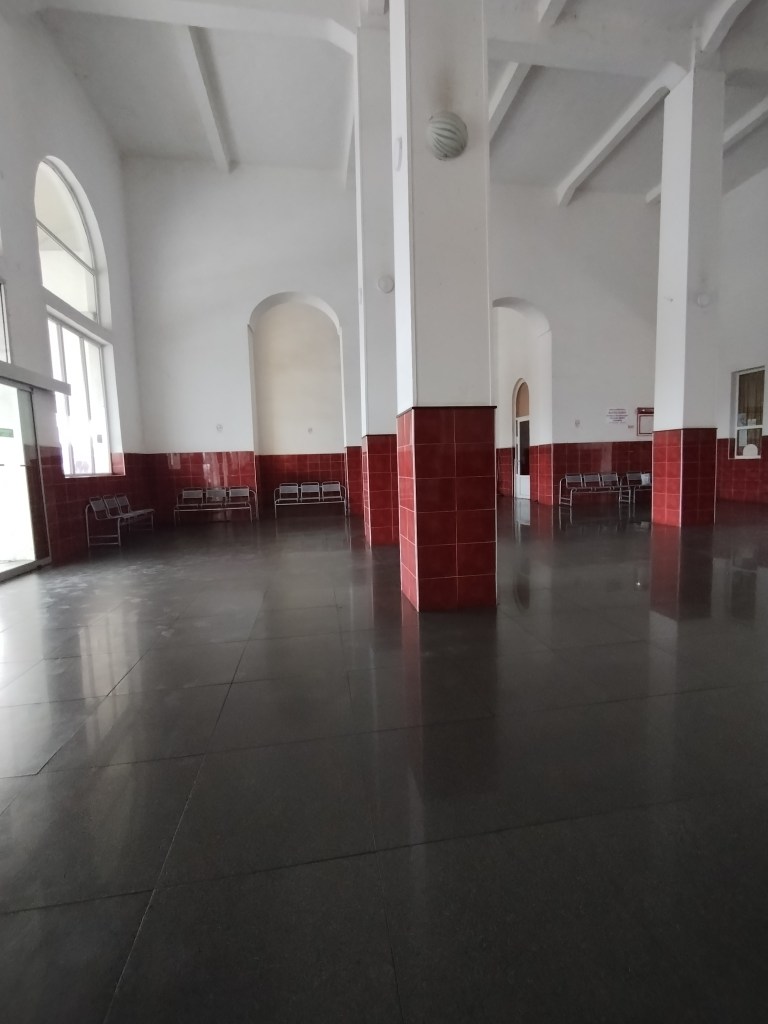
The journey was short and unremarkable. A middle aged woman had decided to occupy my allocated window seat. There wasn’t any point in trying to evict her. The main train station in Tbilisi was a rundown place and a confusing mix of different levels. It was difficult to find the taxi pick up point but after trundling across the sprawling carpark that felt like an obstacle course, I eventually connected with him.
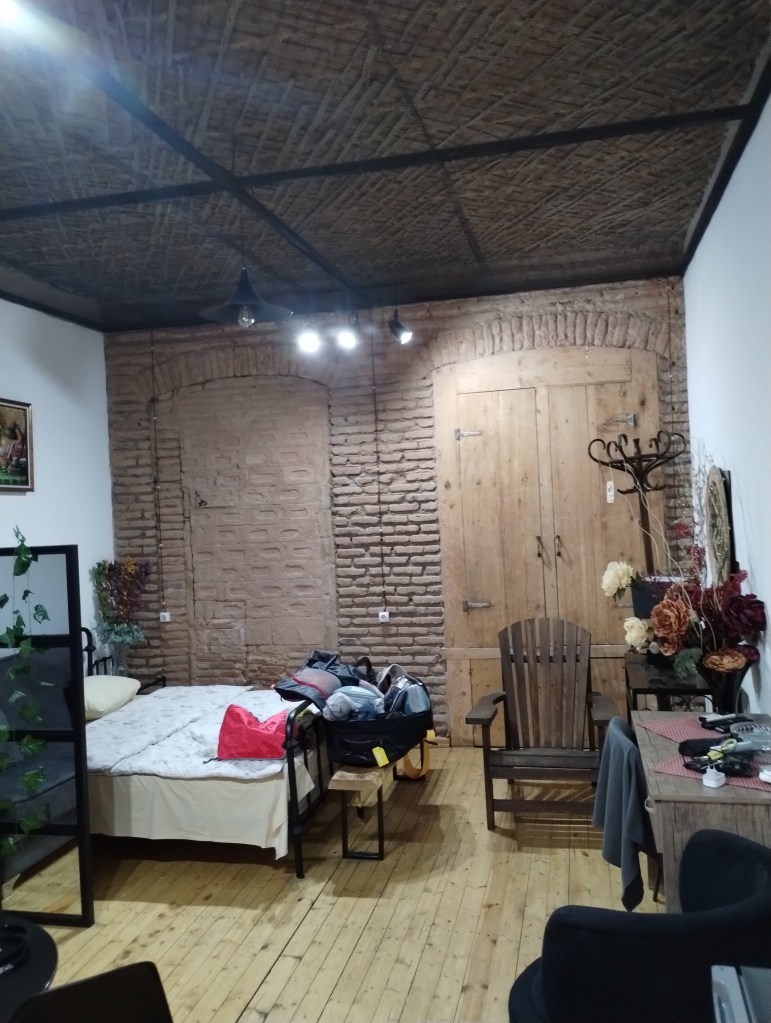
My accommodation was rather rustic. It was in a very old building with a tiny bathroom but was really well located. I wasn’t really taken with the city in my first stay there. I had arranged to meet a couple who were friends of friends who lived in a very small town in the countryside. I gave up trying to navigate the public transport and hired a car. I organised both hire cars in Georgia through a Latvian website that dealt with people hiring out their cars privately. The two I hired were older but in good enough condition. The attraction was the no fault or excess insurance. I had trouble picking up the car in Tbilisi with the Bolt driver managing to deliver me to the middle on an industrial estate some several kilometres from the correct address. I did eventually connect with the guy who was fairly young and I guessed was probably Russian. The car was probably not the best for the purpose as my hostess had warned that the final part of the road to her place was not in great condition. I visited the huge Chronicles of Georgia monument on the way out of Tbilisi. Size was the monument’s most impressive characteristic. Google maps made sure my journey to them was made ridiculously arduous. Twice it led me into obscure blocks of flats that were a total dead end.

Finding the tiny village of Verona where Sofia and her husband Yuri lived was ultimately not too difficult. On the way I spotted a ruined fortress and stopped to investigate. It was the Ujama Fortress dating back to the 3rd Century. As I walked towards a voice shouted at me “Ticket!” I looked to see an elderly gentleman standing 50m away near a booth. He stood there tapping a bamboo walking stick aggressively against a concrete step. Clearly he had encountered people reluctant to cough up the ten lari entrance price. He continued to tap away as I walked towards him. He was obviously trying to look menacing but it was hard not to laugh. The fortress itself looked better from a distance than it did close up. There was a small chapel at the top and a view of the valley below. Probably not worth the price of admission. I didn’t waste much time there and continued on my way.

The car I had was a bright red hatchback that was slung low to try and make it look more sporty. It was probably the worst choice for the journey. After one wrong turn into a paddock, I eventually found the 2km road to Sofia and Yuri’s place, The road was bad indeed and I bottomed out a couple of times but luckily no damage done. Their place was very large and nicely situated on a hillside overlooking the surrounding countryside. Most of the autumn colours had passed so the surrounding hills had a wintry look. It was a pleasant time spent with them especially when the wine came out. They were lovely people and I enjoyed their company. I later regretted my choice to smoke like a chimney during the festivities. It resulted in a rasping cough that haunted me over the following week and I’m sure it allowed a cold to more readily take hold. It was great to get their perspective on Georgia’s politics and precarious position in the shadow of Russia. Sofia was half Russian and decried that very one-sided and unfavourable image it has in western media. This is completely aside from the current Ukraine war.
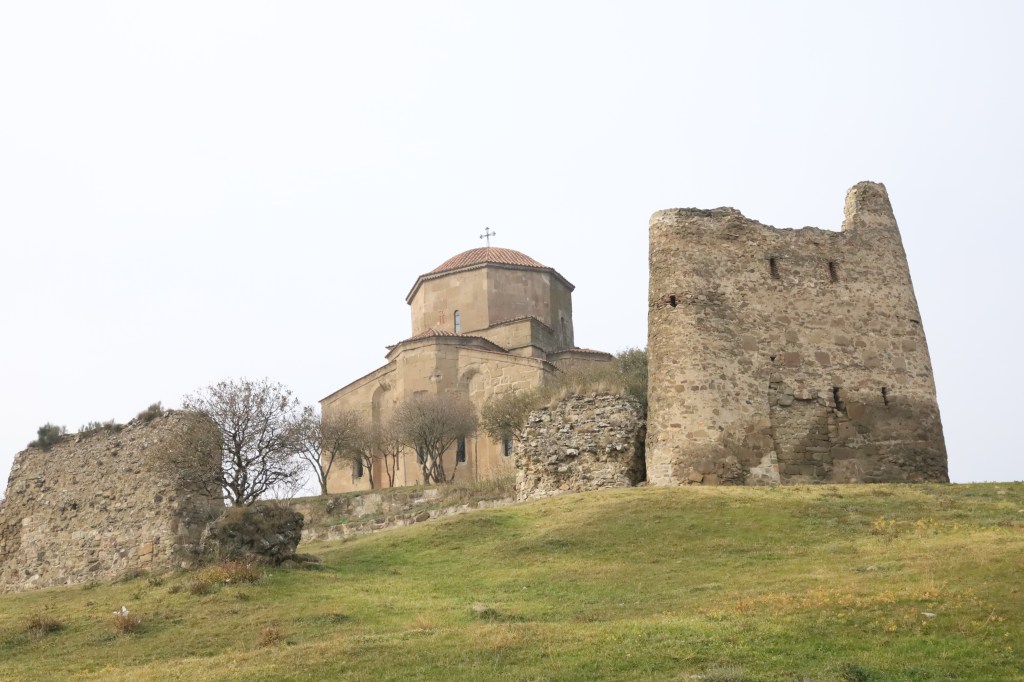
With a heavy head I left the next morning and visited the impressive Jvari fortress and the old city of Mtskheta north of Tbilisi. It was great to have the freedom of the car and not be stuck on a tour. It was a short stay in Tbilisi before catching the bus to Armenia.
Armenia
The trip was suitably disjointed and haphazard as we changed vehicles a couple of times before being shoved in a minibus. The necessity for these drivers to drive like maniacs confuses me to some degree. It’s like there’s a switch in their brain that is either manic or off. Our driver compounded it all by spending his time screaming around the zigzagging road by doing it one handed with a mobile in one hand shouting at it. Your wonder why these dummies can’t invest $5 in a hands-free headphone kit. While I was cramped in the back, I was fortunate to get some leg room which others didn’t. There was an Irish father and son on the bus so I had someone to talk about sport on our few stops. The bus was actually electric so we had to stop for about 30 minutes at one point to charge it.
We arrived after dark in Yerevan and after some confusion I got to my accommodation. I had pretty much decided to base myself here and do a couple of day tours. This was not a bad move and it is how most visitors do it. I did come to regret the tour option to some degree and it has a conveyer belt feel to it. Again, I thought hiring a car is the best way to travel here. Some might think that the manic driving was a disincentive but I would rather be in control then at the mercy of the local psycho bus drivers. Hiring is more expensive here than Georgia.
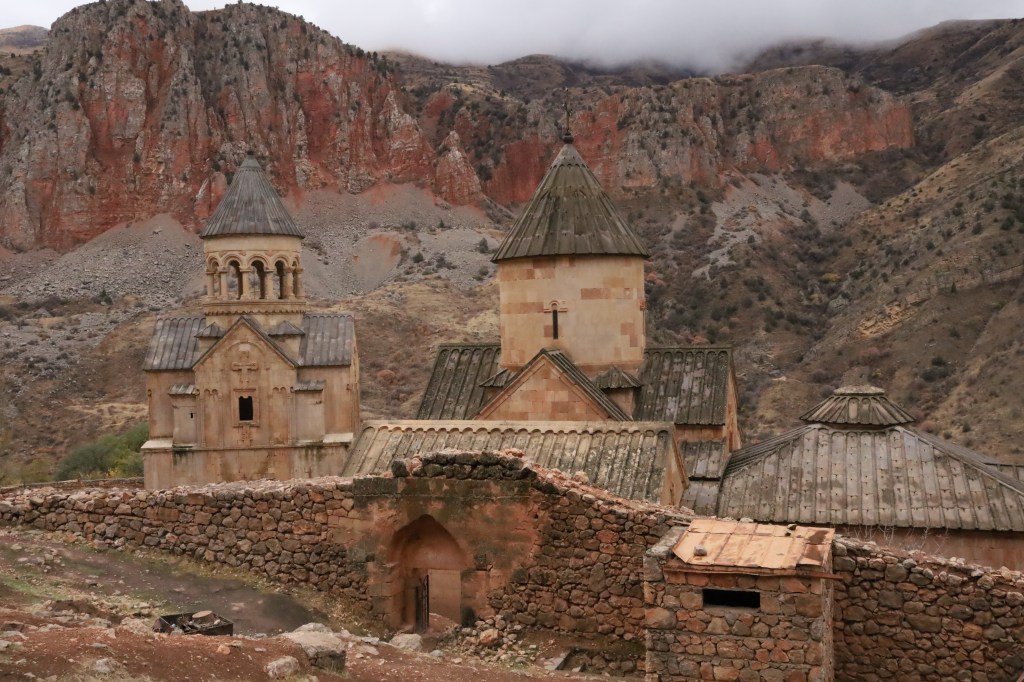
The first day tour I went on was fairly sedate. The first stop was the iconic Khor Virap monastery. Unfortunately the foggy haze that may have been seasonal but also exacerbated by the hideous air pollution of Yerevan meant the huge Mt Ararat was obscured. The mountain, where biblical legend has it that Noah’s Ark landed after the great flood, used to be in Armenia but is now in Türkiye. The tour continued south to the wonderfully built Norovank monastery set in a rocky valley. Monasteries and churches abound in Armenia which claims to be the world’s first Christian country. Some of these buildings are a thousand or more years old and this is always a source of wonder to me growing up in a country where a thousand years ago it was uninhabited. My visit to the history museum in Yerevan reminded me just how long there has been human settlement in this region. It goes back millennia – much longer that the 60,000 years of settlement in Australia.
The others on this bus consisted of a snooty American elderly couple, a pair of Canadians. A foursome of merry Czechs, two Indians, a Dutchwoman, a Frenchwoman, a young Japanese guy and me. The four north Americans turned out to be evangelical Christians. At one point we stopped for wine tasting which the snooty Americans obviously took a dim view of. They sat stoney faced and glaring at the rest of us. Their Canadian counterparts were quite enthusiastic however. There was a guide on this tour and she was quite pleasant and had some interesting phrases in English – “we are now at 1,760 metres of highness”. Quite endearing really.
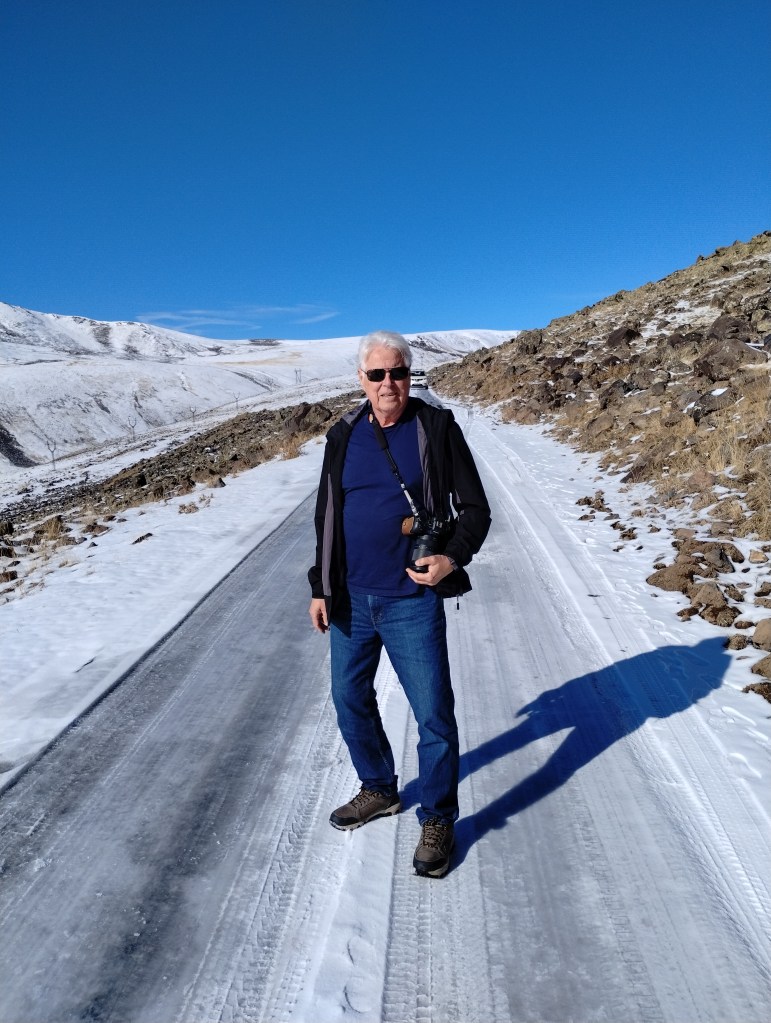
The next day tour was and altogether rougher affair. It had no guide and the driver we had spoke only Russian. There were two Russian women in the car, a North Macedonian, an Omani and myself. The Macedonian guy was a fairly delicate person. At one point I had to give him one of my anti-nausea tablets and surrendered my front seat to him. The Omani guy was a very pleasant and polite young man. The driver couldn’t help driving like a maniac – after all that seems to be hardwired into people there. The disappointment was we could not continue far above the snowline given that there was thick ice on the road. We missed out on seeing Mt Aragast but it was nice to get out and have a walk in the snow.
This, and other later day tours convinced me that they are fundamentally designed for old people or those who want to make it as easy as possible. Fair enough but it tends to concentrate on ticking boxes of tourist cliches. We all skim through countries to some degree but some really are incredibly superficial. I talked with a Spanish woman in Georgia who had done a one-day tour to Armenia from Tbilisi. I was a bit gobsmacked. That’s almost 12 hours on a bus, so not much to experience. I guess you get to “see” a bit of Armenia but is it really anything more than to say you’ve “been” to Armenia – tick. Industrialised travel is and inevitability these days and we are all a part of it to some degree. But I contrasted these tame and cliched affairs with the freedom and sense of adventure I felt when driving around and exploring the Soviet ruins of Kutaisi.
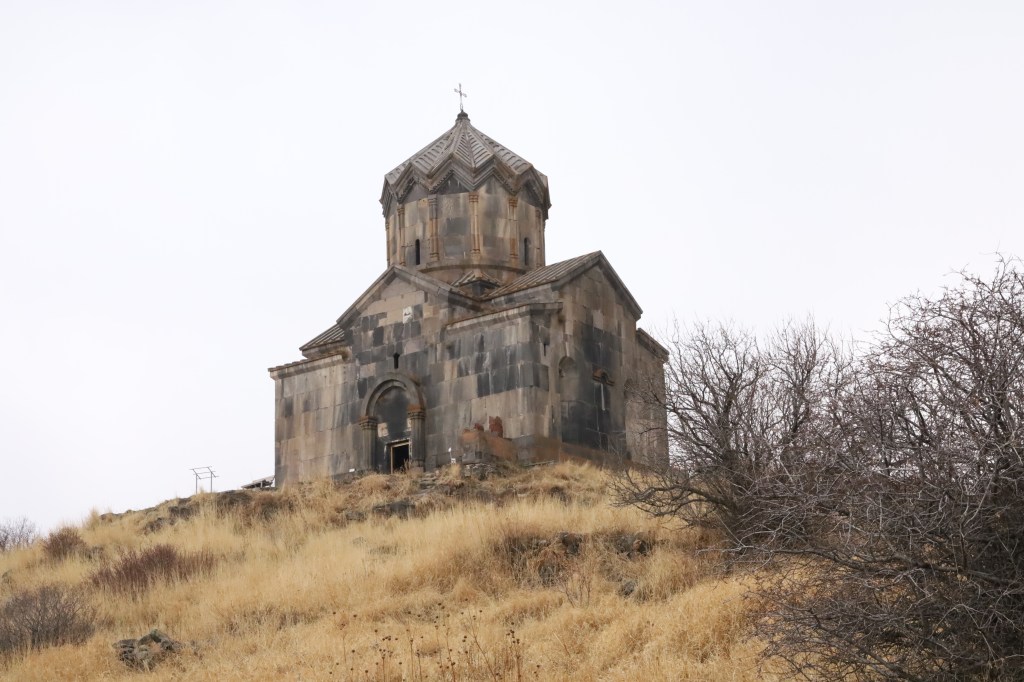
My last stop in Armenia was Sevan. I had thought I would stay in the town which was a bit of a rude awakening. I caught the bus from the most grim and near deserted bus station from the northern outskirts of Yerevan. Sevan itself is a huge lake and it’s what brings the visitors. The bus driver asked me where I was going – lake or city. My hotel was in the city. At some point he stopped on the main road and pointed to the distance, “City” he said. It looked near derelict and grim. I eventually got a Bolt from there to my hotel, the town was not pretty.

Anyway I headed to the lake and the Sevan monastery (yes another one). I was interested also in seeing the Writers Club House of Sevan. It is a Soviet brutalist design but very distinctive. For a while it was a restaurant but has been left to its own devices now. I walked away from the tourists at the monastery – a lot of Indians there. It was surrounded by trinket shops and restaurants. I was glad to take a short walk to the Writer’s House as it was just too good not to photograph. Again it was great to step off the tourist trail and do this. It wasn’t on the tick box list for the tour groups although it’s not exactly unknown. I got a taxi back to town and got the driver to wait by an old Soviet lookout on the side of the highway. It was a good subject to photograph.

I had already bought a ticket for the bus to Tbilisi from Sevan. It left from a hotel complex that is probably popular with locals in summer. It was deserted and closed except for a booth at the front where a security guard emerged with a hostile look on his face. “Bus to Tbilisi?” I asked. He nodded grimly and waved the back of his hand gesturing that I move up the road and away from the gate. I found myself standing in front of a fence on the side of the road. Behind me was a fence that was part of the hotel compound. Two large dogs behind it barked and growled but after a while lost interest and left. Thankfully from the rather deserted spot on the road the bus eventually arrived.
Back to Georgia
On the bus I met an American from Boston. Having found myself increasingly intolerant and annoyed by them. Especially hearing them as they seem to always be a few decibels above everyone else. Very intolerant of me because that’s not always the case. Anyway, this American turned out to be not your average one. He was a holder of three passports – US, UK and Australian. He had an Australian grandfather who had somehow passed all this down to him. He had lived in the UK and Australia and was a bit more worldly than your average Yank. Even better was a rugby fan and player so there was a decent conversation to have.
Driving through the northeastern part of Armenia had been warned about on the UK government website. This advice was probably out of date. We can very close to the border, in fact looking at Google maps, it actually showed the road passing through Azerbaijani territory. Either way that route was pretty unavoidable as all the buses to and from Georgia took that road. We passed a couple of hills where the Azerbaijan flag flew. While there is no love lost between the two countries, there is unlikely to be any conflict between them anytime soon. The last conflict was largely won by Azerbaijan who have more oil, more money, more weapons.
It was nice to return to Tbilisi and to my previous accommodation. The city had grown on me quite a bit more. I’m probably not really in touch with the nightlife but I’m sure it’s good. That was one of the issues with being a 68 year old travelling alone. I guess the familiarity helped a bit.

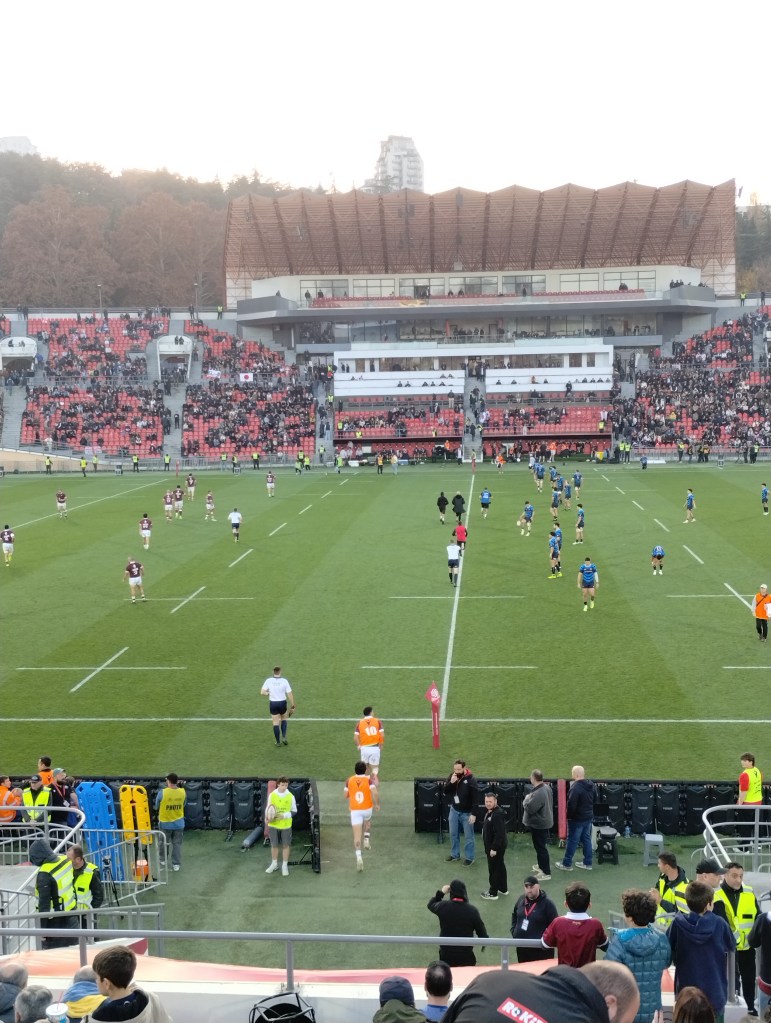
I had bought a ticket to the Georgia vs Japan rugby test match. The stadium was modest as was the crowd. The sides were fairly well matched and the whole game came down to a last minute penalty goal with Japan taking the honours. There were a few foreigners there including chattering groups of Japanese that I passed on the way. The game had more the atmosphere of a club match. While the games are popular in these two Tier 2 rugby countries, they are still useful sides and in the end it was an enjoyable spectacle and interesting because it was different.
The following day I was on yet another day tour, this time north of the capital to the more mountainous north. The northernmost part where there was yet another iconic monastery – Gergeti – was getting reasonably close to the Russian border. All my previous issues with tours were largely reinforced by this. It would have been difficult to do with public transport or at least time consuming. Most of the countries of the Caucasus are sparsely populated so transport can also get thin on the ground. As mentioned before, mashrutkas do most of the heavy lifting but the are demand driven and therefore frequently sporadic. It became a bit of a bugbear for me that hotels in the next town would message me in advance asking what time I would arrive. Given the way transport worked, it was nearly impossible to give a precise time of arrival. All the more reason to travel with your own wheels.

Azerbaijan
I had little in the way of expectations about this place. I had originally planned to travel there by land but that has been impossible since the pandemic. All foreigners must arrive by air. That meant I would not get to visit the supposedly pleasant own of Sheki in the country’s west. I had spoken with a Japanese guy in Armenia who was planning to enter by land. I had said that I understood that was not possible. He looked momentarily shocked but just said: no the border is open. My continued research on the matter dug up two news articles that specifically said that the land border was closed by decree until January 2026. It is likely they will extend it beyond that. Anyway, I wonder what the Japanese guy did in the end. I don’t think have would have had a choice.

So given time constraints and lack of choices I knew I would pretty much to use Baku as a base and so had organised two more one day tours. Of Azerbaijan’s ten million people, around half live in the capital. Baku is an old oil town that had the riches that went with that before Soviet times. That meant there were some interesting and indulgent examples of architecture to be seen. These include some modern additions.
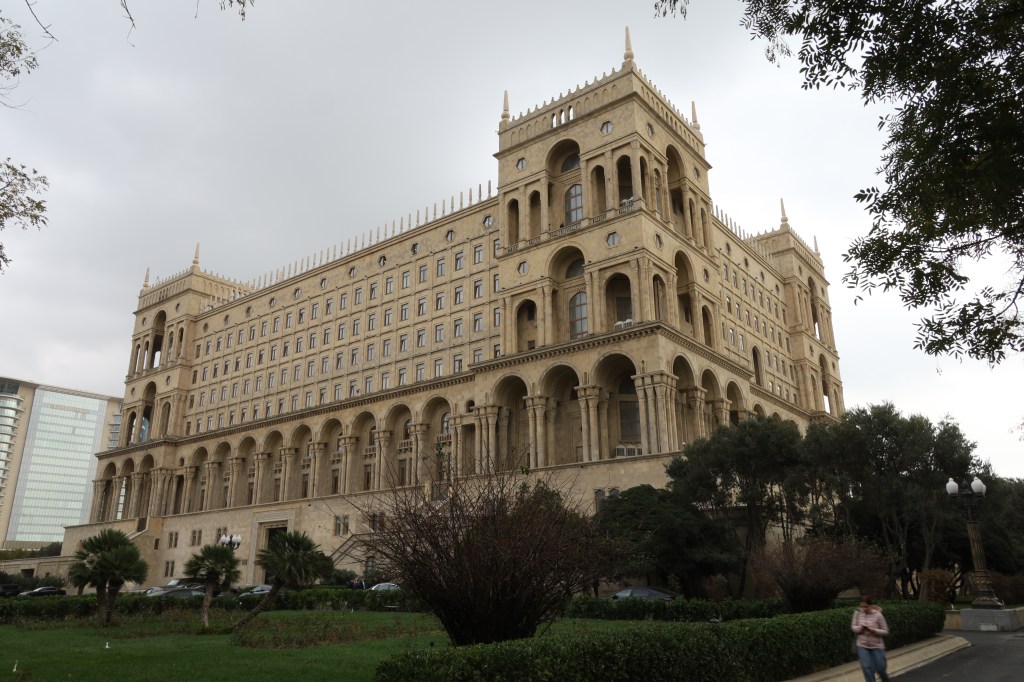
So, I took to walking the streets hunting these out. Nothing particularly spectacular to be found really. The main government offices were huge and built in the Soviet style but there was nothing else outstanding. There were some of the early oil barons’ residences that were designed by mostly Polish architects. The buildings were nice but lacked a wow factor.


It was the more modern buildings that caught the imagination. The flame towers have become a landmark of Baku – a testament to the importance of fire in historical faith but also a reminder of the country’s immense oil wealth. The Heydar Aliyev Centre is a striking building and housed some interesting exhibits. It ended up being well worth a visit.
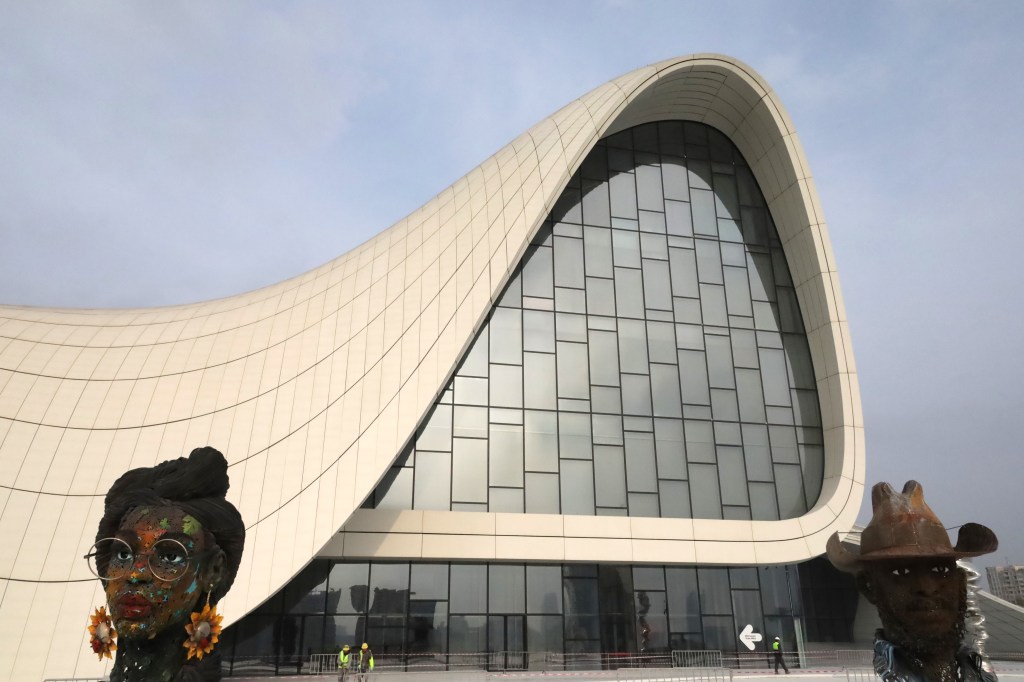
As far as looking outside of Baku, again I wished I could have opted to hire a car. For all the country’s petroleum riches there were still many old Ladas on the road. In an early excursion to the “mud volcanoes”, something for which as a New Zealander was a bit ho-hum, the best part was transferring into some old Ladas to go banging down the dirt road to reach them. Clearly the tour bus was a bit too precious.

There was also the visit to the Gobustan National Park to see prehistoric petroglyphs in its imposing rocks. There was not a lot else left after lunch and it began to feel like I was again on the industrial tourist conveyor.

The following day I was back on the tour circuit to see the Candy Cane mountains and some other villages. The first, so-called Red Village or Qırmızı Qəsəbə in the local language. It is famous as much as anything as a Jewish village in a heavily Muslim country. We were left for a brief exploration but there was quite a heavy police and military presence. My attempt to take a picture of the town’s six-pointed synagogue was quickly shut down by an armed soldier making it clear it was not permitted. Being on a tour leaves you lament the lost photo opportunities. As photography has become a more important aspect of travelling for me.
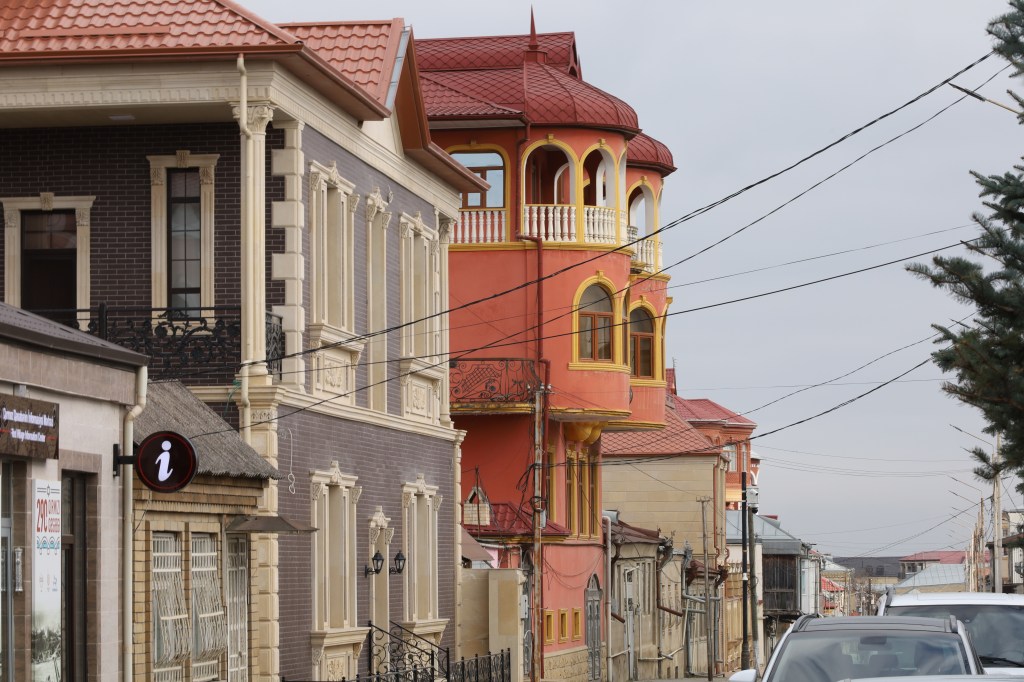
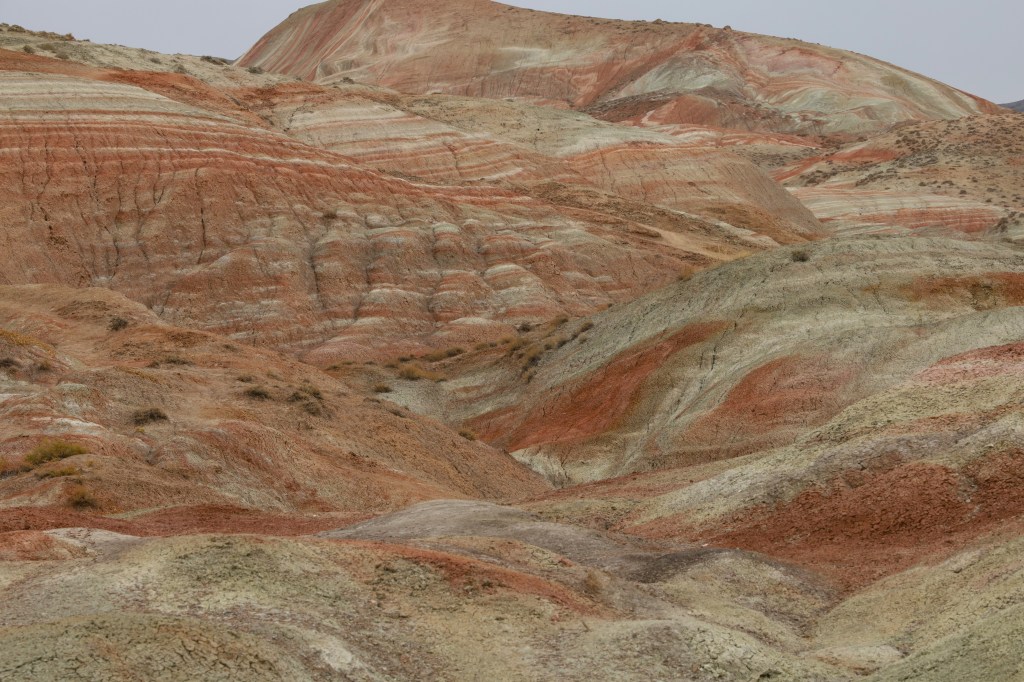
Our next stop was a mountain village that was quite remote but modern communications are catching it up fast. The mountains were rugged but seemingly quite barren. Some of the gorges we drove through were impressive by their sheer scale.

Tajikistan
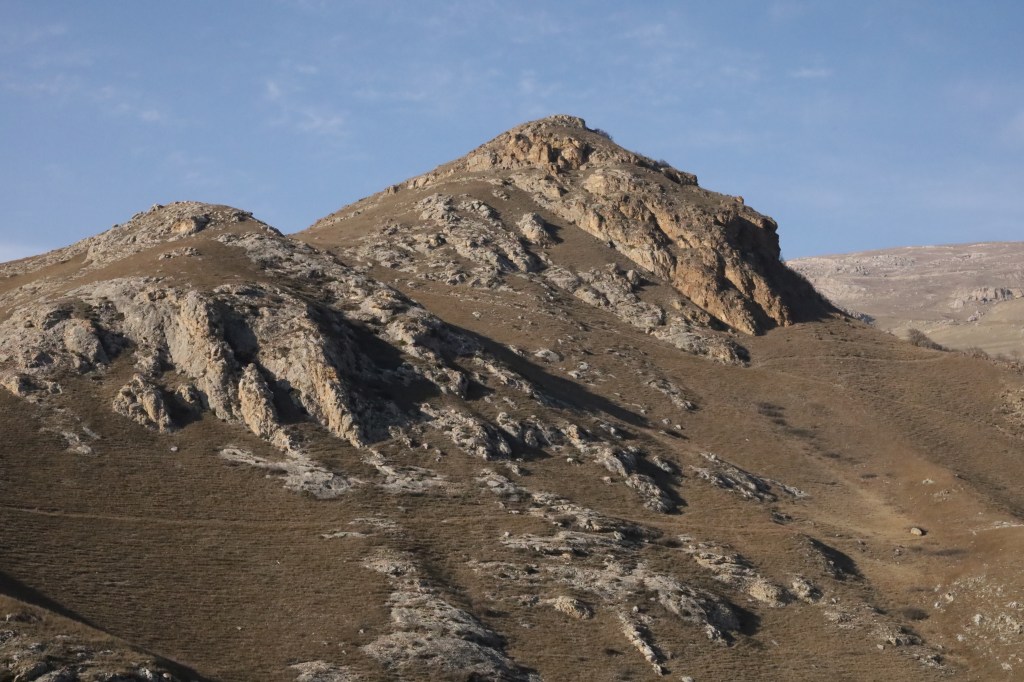
I had begun to wonder about tacking Tajikistan onto this trip. I was going to be quite time limited so wouldn’t get to see much of its natural wonders. That turned out to be half right. On the flight from Azerbaijan, I must say a very blokey flight with about 98% blokes, it smelt of bloke. It turned out that there were a number of Tajiks returning from working in the UK in the agricultural labour sector. The man sitting next to me told me the places he’d stayed and worked in while moving around the UK. My memorable two seasons picking hops in Kent drifting came back to me. I asked if he had enjoyed his time working there. “Yes” said thoughtfully but not really emphatically. He said he had enjoyed it much more than working in Russia which he’d done on three stints over the years in the restaurant sector. He also said his uncle was meeting him at the airport and he would get him to drop me off at my hotel. After all that we never exchanged names.
When we landed, I soon became separated from him and stood near the entrance to the airport trying to message him. Eventually he emerged and looked a bit fraught and distracted. It seems the airline had lost his luggage – a fate shared by fifteen others on the flight. I thanked him and said I would take a taxi and for him to concentrate on trying to retrieve his luggage. He started protesting but it was a bit much to ask. Just then an ancient man emerged from the shouting and jostling crowd at the with a sign saying SUNRISE. I recognised that as the name of my accommodation. I had requested a shuttle from the airport which they said they offered free. I heard nothing more from them so presumed this was not going to happen.

It didn’t stop the driver having issues finding the place which was buried (with another hotel) is a clock of modernised Soviet apartments. It was comfortable enough but the change in the whole vibe – all the places I visited previously are reasonably well touristed – it was clear it was far less so here. I lamented my lack of Russian. Despite a fairly consistent approach on Duolingo, I was not at all prepared to confront the lack of English speakers.
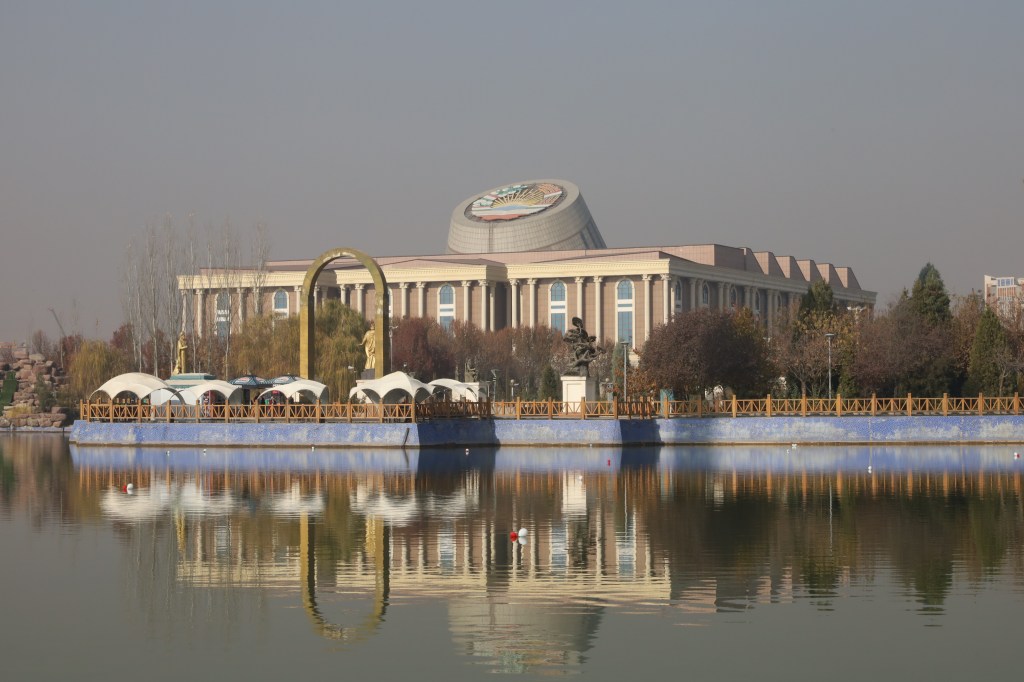
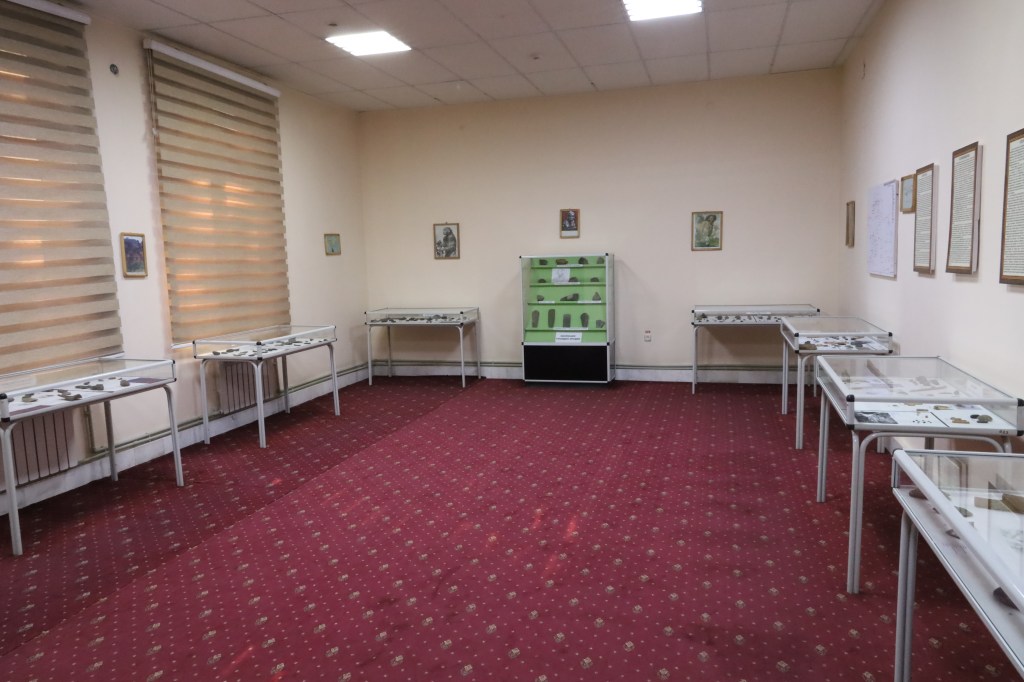
After my initial shock of landing in Dushanbe, I did start to discover the odd, good café and eatery. I wandered through its large parkland and visited a coupled of its Soviet style museums. The national Museum of Tajikistan was a huge building and, for the most part, lacking in much of the way of exhibits. The smaller Museum of Antiquities looked like it had remained untouched for decades but I love those sorts of places (India has more than a few) and it did contain a few interesting objects. The hard to find museum of musical instruments proved much too hard to find and the whole street where it was located had been turned into a building site.
Regrettably, I had not left a lot of time to explore and knew that I might miss some of the country’s natural beauty. All the same, I had underestimated the lack of fast transport. No chance to see the Pamirs although some of the scenery I did catch was spectacular. This was the only Stan that is an official country I had never visited. I was to head north to a city called Khujand, which sits on the edge of the Fergana Valley. Most of this is in neighbouring Uzbekistan.
One of the challenges here was actually trying to get some useful information. Unlike all the previous countries I had visited in this region it lacked any sort of user friendly rideshare app. I needed to get to a bus station in Dushanbe that was located some kilometres from the centre. Transport here is even more fragmented than many of its neighbours but with a lot of research and not much help from locals I knew I would need to take a shared taxi going north. I needed to walk out in the early morning and try and hail a cab. I ended up doing this relatively easily and luckily the driver knew exactly where I needed to go. The “bus station” was simply an open patch of ground and I was immediately swarmed by shouting and competing drivers. The very expensive private option was offered but I insisted on sharing. It took around an hour or so for the taxi to fill and I watched as the drivers continued to swarm around arguing constantly. It got quite heated at times but never came to blows. Things weren’t too bad in the taxi but with four passengers it was a little cramped. In the four or so hours it took us to get to Khujand I saw some spectacular scenery but had no real opportunity to take photos. I remember our horse trek guide in Kyrgyzstan saying that the low population and poor transport made hiring a car a more expensive option but the best one. I think that would apply in Tajikistan too. Not the most congenial driving environment but not the worst either.
Arriving in Khujand was a confusing experience and while helpful people put me on to a taxi driver he was absolutely clueless about where I was trying to go and showing him to Google map was greeted with complete indifference. He ended up dropping me in front of a large museum there. I was able to message the host of the apartment I was staying in and luckily was in walking distance.

It was a Soviet era apartment block, not as large as many but fairly rundown on the outside. The inside was a little better but had the usual unfriendly and harshly bright overhead lighting. I immediately, with the help of my host, headed to the Arbob Palace. This huge folly was the project of the head of the large collective farm in the area. At the ticket office there was a guide who was rather unenthusiastic about my arrival. The electricity was not on at the time due to frequent power cuts throughout the country. Nonetheless it was weirdly impressive in its scope. The English-speaking guide came with the admission price and I ended up with a private tour. Local and international tourists were thin on the ground at this time of year. My guide’s lack of enthusiasm continued throughout although there were brief moments when he sounded proud of the place. I pointed out that the palace was built in the year I was born and that was met with a dismissive grunt as was anything that I volunteered about myself or where I was from. There was a mosque and museum complex in the city but these paled in comparison to the main centres in Uzbekistan.

One of the most impressive features of Khujand was its huge market, full of bustle and smells and meat in its weirdest forms. It was great to walk through it. I got plenty of stares as I stuck out like a sore thumb. But people were mostly quite friendly when I approached them. I stopped at a popular food stall selling pastries directly from the oven. People in the crowd noticed me and pointed out the foreigner. The stallholder duly served me with a meat pastry. Saying my thanks I walked off with my aromatic purchase. I thought this would be fresh and good. I was wrong. It was a bit ghastly and the fatty meat coated my mouth and tongue with sludge. I carefully disposed of it at the first opportunity.

The following day I was in a shared taxi to the Uzbek border. A couple of other guests of my host made up the numbers on this. We had to get off at the border and walk through immigration and customs. It wasn’t always clear where to go. Land borders usually involve a bit of a tramp through no man’s land in this part of the world. Vehicles crossing borders obviously involve too much paperwork.

Uzbekistan
I found it easy to get a shared taxi to Tashkent. One of the passengers was a pleasant young Tajik man. He showed interest in what I had done in my working life and asking my advice on what career path he should follow. At some point he said he had been to the University of Westminster where I did my Masters degree. I later realised that this university has a campus in Tashkent so that is most likely where he studied.
Tashkent was getting wintery and most of the autumn foliage had been shedded from its trees. I had come here largely to leave but that proved to be a challenge. The Indian airline Indigo were sending me WhatsApp messages urging me to come to that airport and all was ready to go. When I arrived there, my flight was nowhere to be seen. I approached the information desk and she knew nothing of it. She also pointedly added that no one else had shown up for it. It all felt a bit Kafkaesque. I wrestled with Indigo’s AI app which told me that the Tashkent to Delhi flight had been cancelled but the legs from Delhi to Singapore and Singapore to Sydney were fine! I could not get a phone line and had to ring Jackie in Sydney on WhatsApp and she called India and put the phones together. They apologised for nothing of course but booked a flight the following day from Tashkent to Sydney via Singapore and Mumbai. This was a trip of 37 hours!
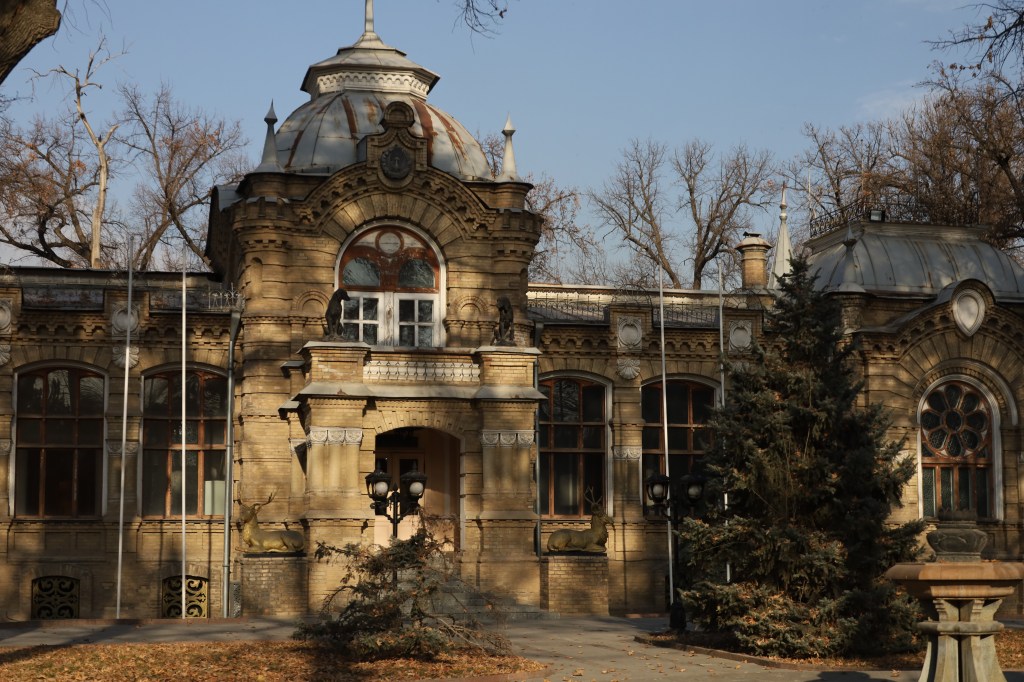
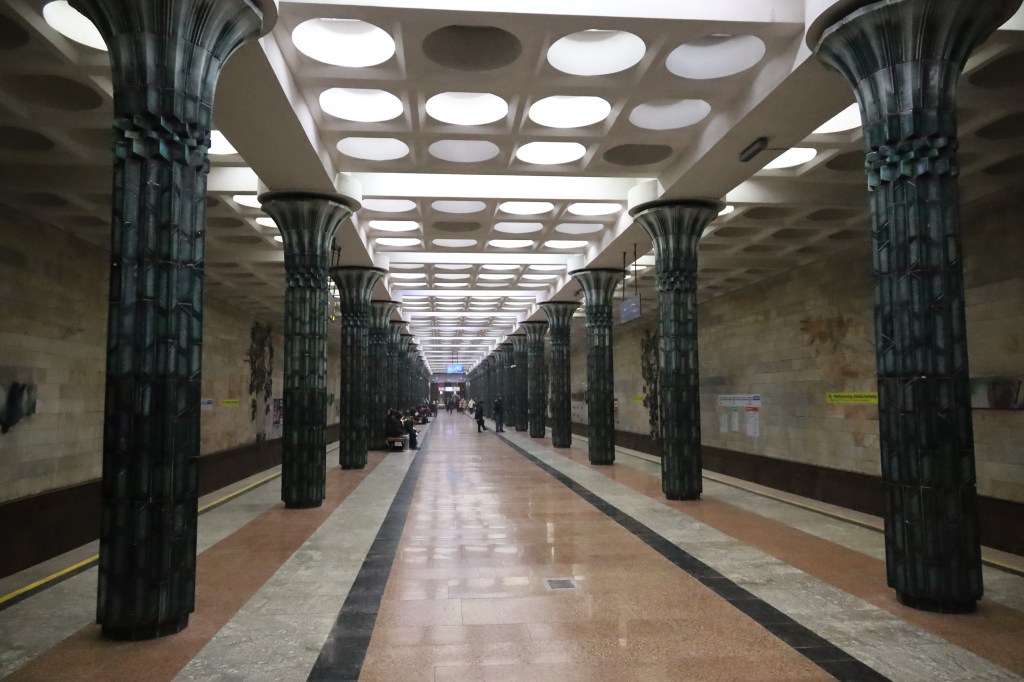
I filled my time in Tashkent by taking the metro and photographing some of the more interesting stations. I also discovered an old Tsarist palace I had never seen on anything I had read about the city. That evening, I received an email from Indigo saying they could not confirm the final leg of the flight but I could call them and cancel or delay the flight again. I cancelled and bought a ticket on Air Asia. I later learned that Indigo had gone into meltdown when the Indian government had introduced new pilot fatigue rules. Indigo ended up cancelling over 8,000 flights.
And so I finally left the next evening.
 Wandering and wondering
Leave a comment